







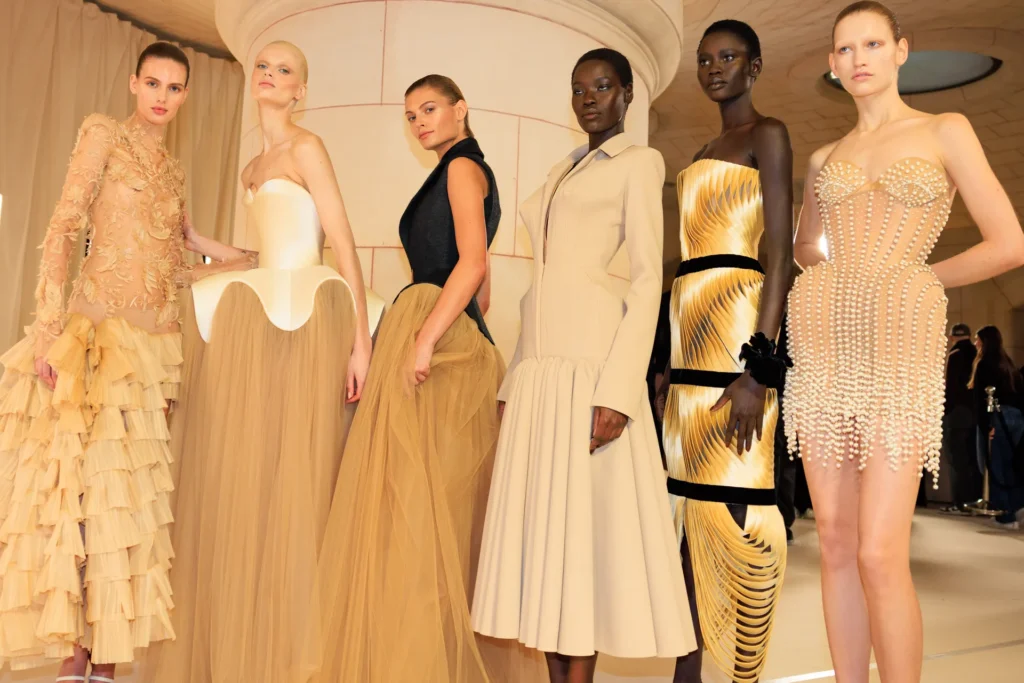
There are moments in fashion when a collection doesn’t just “walk.” It confronts. It interrupts. It reminds the industry that imagination should never bow to minimalism just because the world is tired. Daniel Roseberry’s Spring–Summer 2025 Haute Couture collection for Schiaparelli is exactly that moment — a reclamation of decadence, technique, and historical obsession, delivered with the kind of precision that silences the room.
This season, Roseberry went hunting for color in places most designers would ignore: antique ribbons from the 1920s and ’30s, tucked away in an old shop like forgotten spells. Ribbons once spun in Lyon before the war, then hidden from invading hands — only to be rediscovered by someone bold enough to see that “new” doesn’t have to look simple. “Can’t the new also be worked, be baroque, be extravagant?” Roseberry asked. Couture has been craving someone brave enough to put that question back on the table.
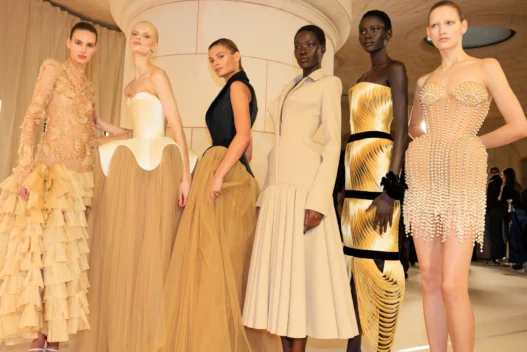
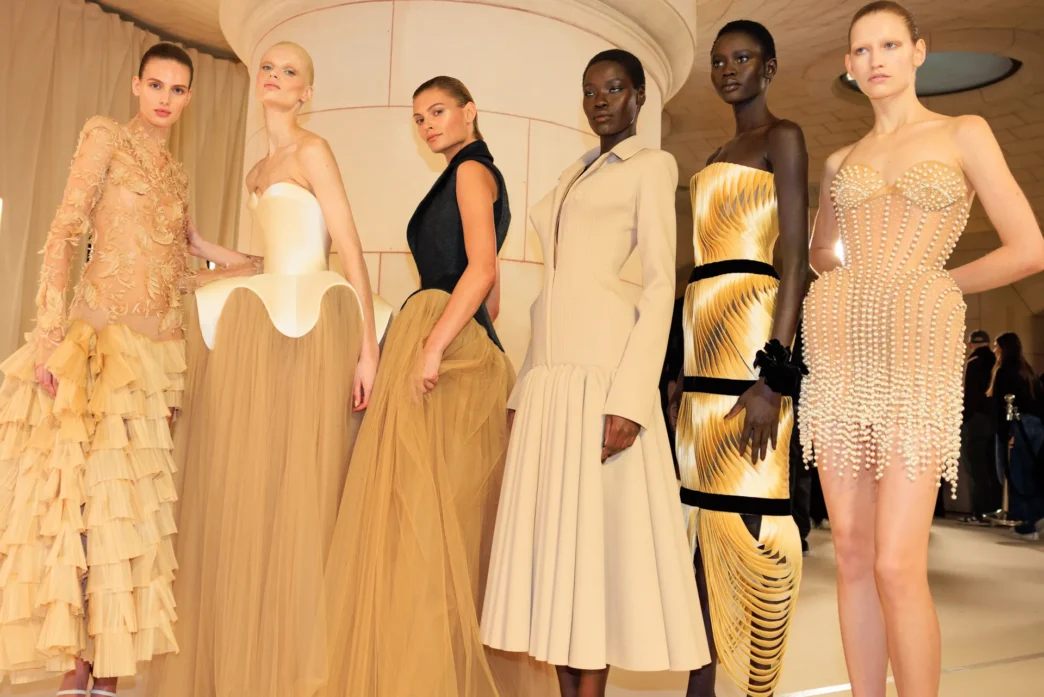
The palette alone is a provocation: butter, saffron, faded peacock green, burnt brown renamed “toast,” and a warm French grey rechristened “mink.” These colors became the portal — and Roseberry stepped through unapologetically. Instead of chasing futurism through sterility (a tired industry habit), he resurrected silhouettes that knew glamour before glamour was cynical. He studied Grès, Worth, Poiret, Saint Laurent, Alaïa — not to imitate, but to absorb their courage.
The result? A collection built on historical fluency and modern nerve.
Liquid deco curves sculpt the body in whispered georgette, embroidered with Japanese bugle beads before being armor-mounted onto French corset toile that slices the hips into sharp, near-mythical blades. Prewar Schiaparelli shoulders — severe, commanding — are elongated and pared back at the same time, paired with bias-cut column skirts that flow like ’90s minimalism wearing a far more expensive passport.
Then there are the technical rebellions. A classic Schiap blazer recut in Ultrasuede, overembroidered until it feels like a relic from a future museum. Feathers soaked in glycerin, brushed with keratin, transformed into something Ginger Rogers would’ve danced in — only without the monkey fur. Satin cuir molded into A-line baby dolls with padded hips echoing the bust, trembling with smoked quartz beads that catch the light like secrets.
Roseberry even slips in a quiet nod to Elsa herself — a plissé halter rendered in sand-toned polyamide tulle, heavy enough to carry gravitas but refined enough to float. And beneath it all, the ateliers flex a nearly monastic discipline: toile corsets layered with wool and cotton, topped with stretch satin pulled so perfectly taut it looks poured on, not sewn.
Nothing in this collection feels rushed. Every dress, every shoe, every bag has been tended to like an heirloom in the making. Tiny objects treated as petits bijoux, embroidered with cording, resin, and the kind of obsessive handwork that reminds you couture is not a trend — it’s a vow.
And in his closing words, Roseberry doesn’t sugarcoat the pressure. Couture is a climb. A pursuit of perfection so demanding it borders on holy madness. But he doesn’t run from it. He admits it’s love, yes — but also duty. After all, he stands at the helm of the last great Maison to be resurrected, and he knows exactly what that responsibility costs.
This collection isn’t nostalgic. It’s a confrontation with modernity’s boredom. A refusal to let the industry lower its standards. A reminder that imagination is expensive — and worth it.
Roseberry aimed high this season. And by the time the final look left the runway, it was obvious:
He didn’t just reach for the sun.
He hit it.