

Olivier Rousteing Takes the Reins at Rabanne
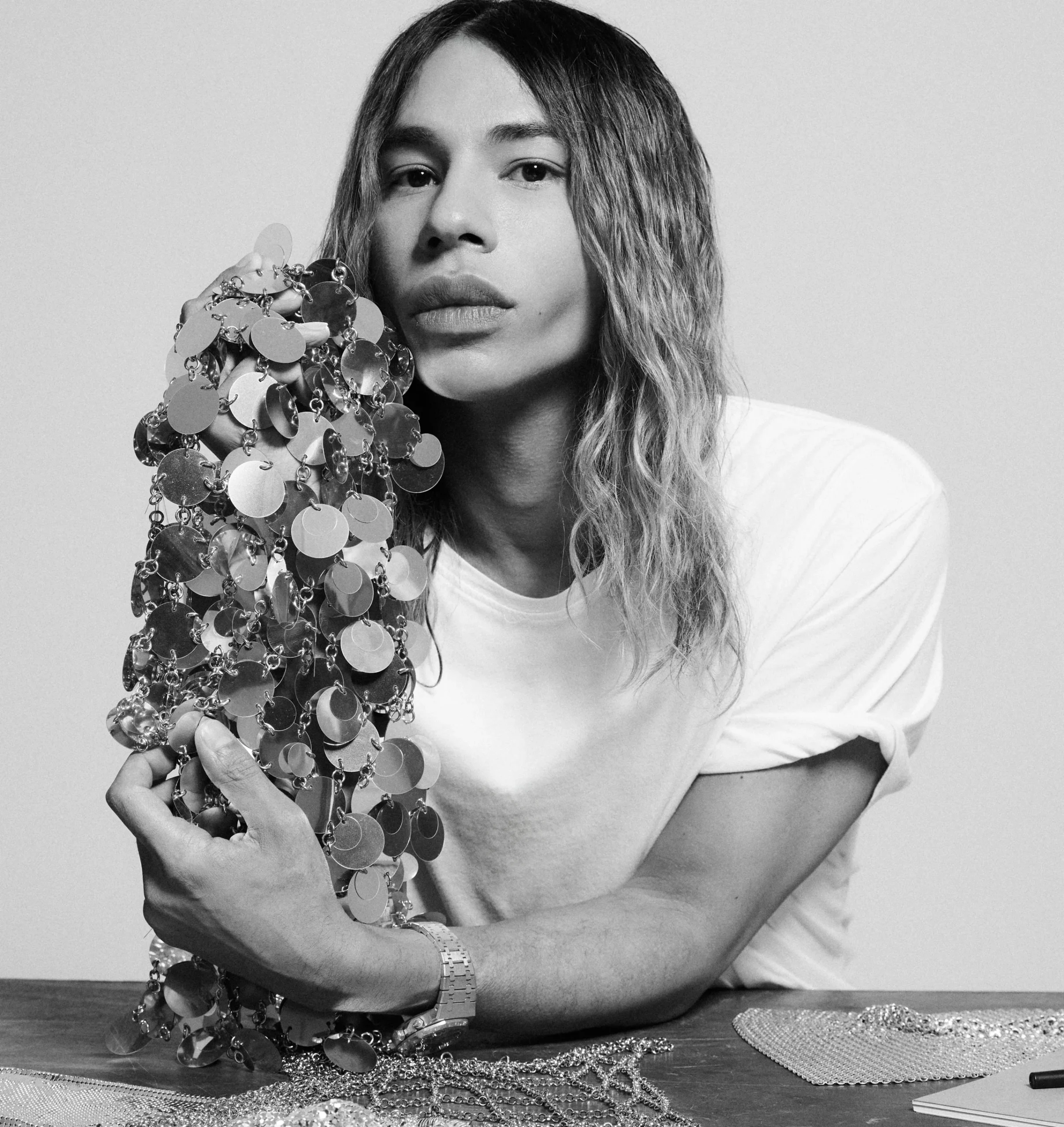
Olivier Rousteing Takes the Reins at Rabanne
Luxury fashion’s ongoing wave of creative-director appointments has reached another milestone.
Rabanne has officially named Olivier Rousteing as its new Creative Director, succeeding Julien Dossena and marking what the maison describes as a significant new chapter in its evolution. The appointment arrives amid one of the industry’s most active periods of leadership change, as luxury houses continue reshaping their creative identities for a rapidly evolving market.
Among the recent appointments across the sector, this one stands out for its strategic alignment.
Rather than pairing a designer with an unfamiliar creative language, Rabanne has chosen a figure whose career has consistently been defined by confidence, innovation, and a willingness to challenge convention—qualities that have shaped the maison since its founding.
A Shared Legacy of Boldness
Few fashion houses possess a heritage as unconventional as Rabanne.
Founded by Paco Rabanne in 1966, the maison built its reputation by rejecting traditional ideas of luxury through the use of industrial materials, sculptural silhouettes, and futuristic design. Chainmail dresses, metallic constructions, and experimental craftsmanship established a visual identity that continues to distinguish the house decades later.
Innovation has never been a seasonal direction for Rabanne—it has been its foundation.
Rousteing’s career reflects many of those same principles.
During his fifteen-year tenure at Balmain, he transformed the French house into one of luxury fashion’s most recognizable global brands. His collections became synonymous with strong tailoring, sculptural glamour, intricate embellishment, and an unmistakable visual identity that remained consistent while evolving with the market.
At a time when many luxury brands face increasing pressure to satisfy shifting consumer trends and digital algorithms, creative consistency has become one of fashion’s most valuable assets.
Rousteing has demonstrated that maintaining a clear point of view can be just as powerful as constant reinvention.
Innovation Beyond the Runway
Rabanne occupies a distinctive position within the modern luxury landscape.
Unlike many heritage maisons that rely heavily on archival storytelling, Rabanne has historically looked toward the future. Its identity has long been built around experimentation, technological exploration, and redefining conventional ideas of fashion.
The house has indicated that Rousteing will expand Rabanne’s creative universe while strengthening the relationship between fashion, beauty, and innovation.
That objective reflects a broader shift taking place across the luxury industry.
Today’s leading fashion houses are no longer defined solely by ready-to-wear collections. They operate as cultural ecosystems in which fashion, fragrance, beauty, accessories, and digital experiences collectively reinforce a unified brand identity.
For Rabanne, whose fragrance business has become one of its strongest commercial pillars, this integrated approach represents a natural continuation of its long-term strategy.
Heritage as a Foundation
One of the defining themes surrounding Rousteing’s appointment is continuity.
In announcing his new role, the designer acknowledged both Paco Rabanne’s pioneering vision and Julien Dossena’s contribution to the maison’s contemporary identity, emphasizing the importance of building upon an established legacy rather than replacing it.
That balance remains one of luxury fashion’s greatest challenges.
Creative directors are often expected to modernize historic brands while preserving the characteristics that made them culturally significant. Leaning too heavily on archives risks stagnation, while abandoning heritage altogether can weaken a maison’s identity.
The strongest appointments succeed by treating heritage as a foundation for innovation rather than a constraint.
Early indications suggest that Rabanne intends to pursue precisely that approach.
More Than a Creative Appointment
Rousteing’s arrival carries significance beyond design alone.
Rabanne remains one of Puig’s most valuable luxury brands, becoming the company’s first billion-euro brand in 2023, driven largely by the global success of its fragrance portfolio.
Yet within luxury fashion, commercial performance is only one measure of success.
Fashion collections shape public perception. They generate cultural conversation, strengthen brand desirability, and define the creative narrative surrounding a maison. Even as beauty and fragrance continue to drive substantial revenue, fashion remains the industry’s most influential storytelling platform.
This appointment therefore represents more than a change in creative leadership—it signals Rabanne’s long-term ambitions within an increasingly competitive luxury landscape.
Looking Ahead
Rousteing’s first collection for Rabanne is expected to debut during Paris Fashion Week in March 2027.
While industry attention will inevitably turn toward silhouettes, craftsmanship, and aesthetic direction, the broader significance of the appointment lies elsewhere.
The central question is whether Rousteing can translate his distinctive creative identity into a maison whose reputation has always been built on experimentation and forward thinking, while preserving the characteristics that have made Rabanne one of fashion’s most recognizable names.
If successful, the partnership has the potential to become one of the defining creative collaborations of this new era of luxury fashion.
In a year characterized by constant leadership changes across the industry’s biggest houses, Rabanne’s decision distinguishes itself through strategic coherence. Rather than signaling a departure from the maison’s identity, the appointment reinforces the qualities that have defined the brand for decades while positioning it for its next chapter.
Your Ad Goes Here
when an unknown printer took a galley of type and scrambled it to make a type specimen book.
Your Ad Goes Here
when an unknown printer took a galley of type and scrambled it to make a type specimen book.
Your Ad Goes Here
when an unknown printer took a galley of type and scrambled it to make a type specimen book.
Recommended For You
when an unknown printer took a galley of type and
scrambled it to make a type specimen book.